Treatment Accountability
We have entered an era of treatment accountability. Historically, it was enough to know the client (patient, offender or victim) completed their assigned, treatment protocol. It was assumed, when treatment (classes, meetings, counseling, or psychotherapy) was completed, the client was better.
These assumptions are being challenged. Many people (courts, probation departments, evaluators, referral agencies, treatment staff,
victims, and others), including the patients and their families, want to know if treatment was effective. And, insurance carriers, managed
care administrations, state and county overseers, program managers, regulators, oversight committees, and taxpayers also want to know
if treatment was effective.

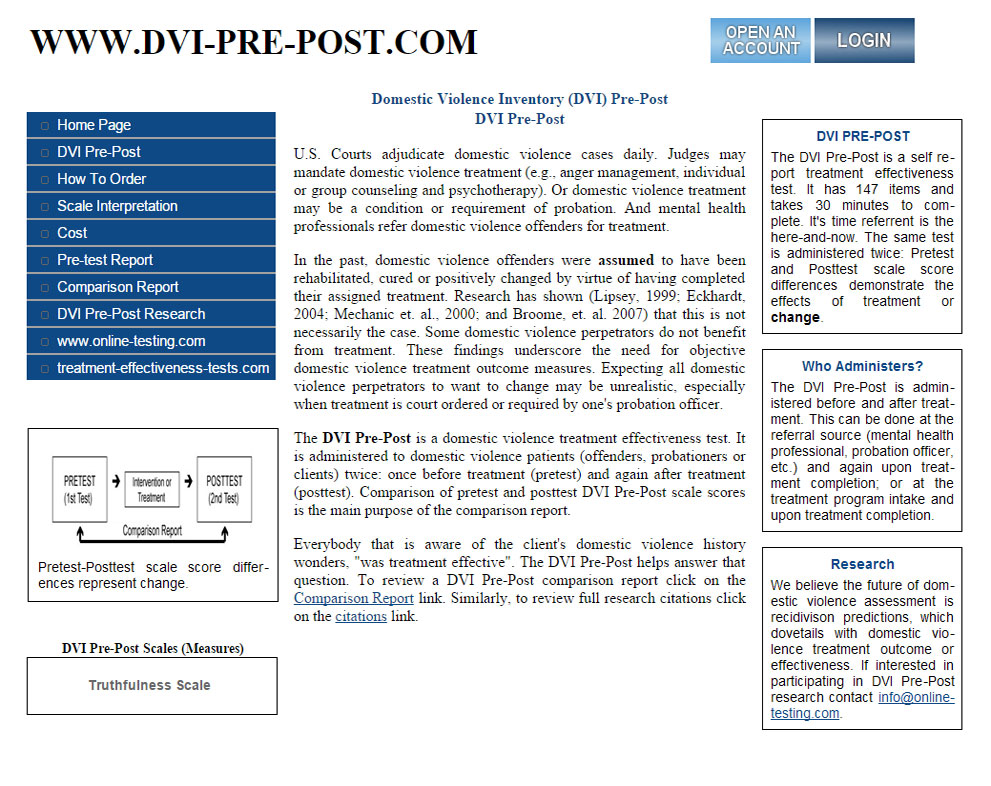
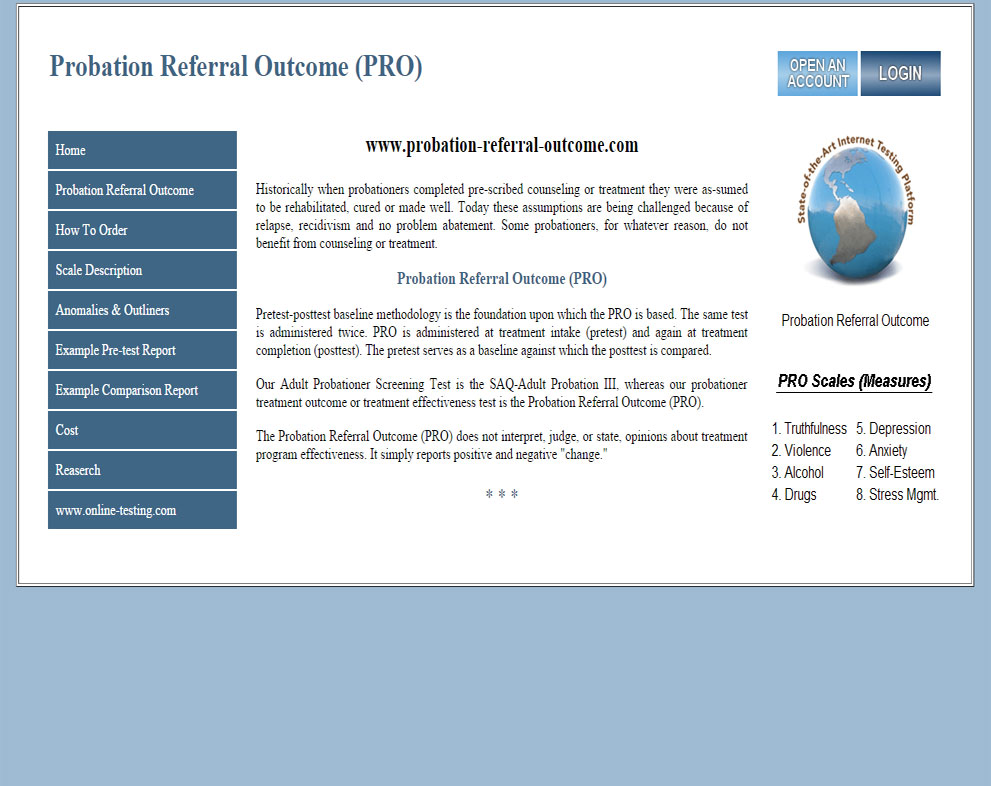
The Pre-Post Inventory helps answer the question, "Was treatment effective?" Its eight (8) scale, pre-post comparisons reflect client, patient,
offender, or victim change, during treatment. The Pre-Post Inventory is a treatment effectiveness test.